Human Writing vs AI Content: What Google Actually Rewards In 2026
Did you know the facts of digital marketing are changing day by day? Well, in today’s landscape of digital content. 2026 has undergone a fundamental transformation since AI has come and is managing much of the work. Google has moved from a “Search Engine” to an “Answer Engine,” and as a result, the way we write, structure, and optimize content has shifted permanently toward Modular Design and Contextual Intent, which is the major focus for every writer.
In this guide, we will explore the three pillars of modern content strategy based on the evolution of search intent, the mastery of prompt engineering, and the rise of modular content, and what is coming in the upcoming future trend for every digital marketer. Did you know content is the backbone of Digital marketing? Well, if you have content that is well written, then hit it and post it now! The answer to your question, how is it the backbone of digital marketing, is simple: better content, better conversion that leads to ROI, which is why it covers content, SEO, social media, and website.
The Future of Content: Search Intent, Modular Design, and the New Era of SEO
The world of content writing, SEO, and digital marketing is changing faster than ever before. In the past, ranking on Google was mostly about keywords, backlinks, and publishing long blog posts. Today, artificial intelligence, user behavior, search personalization, and Google’s advanced AI systems are reshaping the entire digital industry. One thing is very clear in 2026: AI is changing workflows, not completely replacing human creativity. Why?
Content writers, content strategists, SEO experts, and digital marketers are still highly valuable because businesses need people who understand emotions, psychology, branding, storytelling, strategy, and audience behavior. AI can generate words, but humans develop trust, authority, originality, and connection with the consumer to meet their perspective in every way.
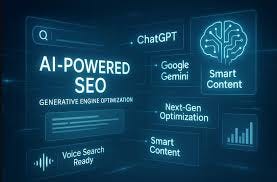
In 2026, search engine optimization has changed from “ranking on Google” to Generative Engine Optimization (GEO), which most people are looking for a professional writer so that they can get their website in the AI overview section. GEO is becoming the trusted answer that AI systems (like Google AI Overviews, ChatGPT, and Perplexity) cite as where people get their answers from and move on to what they need. Once they get their answer, they look for a link and an authentic source. Therefore, traditional 10-blue-links SEO is no longer sufficient; success now requires navigating a “synthesis-first” environment where AI interprets intent and summarizes information, causing organic clicks on top results to decline by over 34%.
1. The Evolution of Search Intent in 2026
Search intent is no longer just about finding information or doing research on the global World Wide Web search engine or searching for answers from AI sources such as ChatGPT, Claude AI, Perplexity AI, and Google Gemini. Google’s AI systems now try to understand what the user actually wants to achieve and what the user is looking for. When we talk about search intent, it is divided into four categories that most people try to implement on their websites and blogs. Here are some of the following:
- Informational
- Navigational
- Transactional
- Commercial
Now, a new layer has become extremely important:
Execution Intent
The users no longer want a detailed description. They are looking for the perfect answer that meets their perspective, in simple words. You can say the 5W system.
- What
- Where
- Why
- When
- How
For example: A user searching for “Best budget camera for YouTube in 2026” does not simply want a list of cameras anymore. Google’s AI systems now attempt to:
- Compare products
- Analyze Reddit reviews
- Check pricing
- Show local availability
- Summarize pros and cons
- Recommend the best option based on the user’s needs, which means content creators must think beyond simple writing. The future writer must answer:
- What action does the user want to take?
- What problem are they trying to solve?
- What decision are they trying to make?
The AI Search Era (GEO & AEO)Generative Engine Optimization (GEO):
Today, AI search also involves structuring content with entities having a unique perspective, which has changed everything so that AI models can easily extract, summarize, and cite it.
People are looking for ways to get into the AI overview to challenge the AI Zero-Click, which is the New game changer.
Most users can easily experience direct answers from the AI overviews section that lead them to higher brand visibility but lower traditional traffic.
AI overview is the main point:
Over 80% of conversion journeys now touch an LLM (Large Language Model), making citation in AI answers a top-five factor for brand perception where they can easily optimize for long-tail, conversational questions (Who, What, Why) rather than just short keywords, utilizing tools like and answering their audience to increase organic growth.
2. Google’s AI Overviews Changed SEO Forever
Google AI Overviews and AI-powered search experiences are among the biggest SEO changes in recent years. Here is the change that has come for implementation. Instead of sending users directly to websites, Google now summarizes information inside search results, which creates a major challenge. For example: If your content is purely generic, repetitive, or copied from competitors, then this is what Google’s AI do is they never shows your website based on how much time you have invested in it, which is why “Information Gain” became one of the most important SEO concepts in 2026. Let’s go a little deeper
3. What is Information Gain?
Information Gain is defined as your content must provide something new, useful, and unique for the audience to gain knowledge and ask questions about it. Something new and incredible that no one knew or had ever experienced before. Something that creates awareness and grabs the attention of our audience, which is why AI-generated articles repeating old information no longer work effectively.
The Writer’s Approach in 2026:
Today, most writers must now optimize for “Information Gain.” Content that repeats the top results will be ignored by Google’s AI, which is why Google EEAT was introduced this time. Now content must provide:
- Original Data: Surveys or testing results.
- First-Hand Experience: Statements such as “In a 48-hour stress test, we found…”
- Entity-Driven Context: Linking advice to experts and verified organizations.
Google now rewards content that includes original research, has surveys, experiments, Data analysis, Industry statistics, personal testing, real campaigns, case studies, and practical results, which performs better because it contains authentic experience. For any expert-Based Content, Google will take its valuable content connected to:
- Real experts
- Trusted organizations
- Verified entities
- Industry professionals
It is closely connected with Google’s E-E-A-T principles:
- Experience
- Expertise
- Authoritativeness
- Trustworthiness
That is highly important for every writer to implement in their writing system today, in 2026.
E-E-A-T 2.0:
The web is flooded by AI slop when it comes to implementing EEAT, but this time Google is doubling the EEAT system on real experienced matter to verified authorship, which has created a strong actionable strategy for every writer in the industry.
Google wants writers and SEO to create topic clusters having all the relevant topics in one link on one page by giving multiple supporting sub-topic articles to build authority.
This also includes specific data points, statistics, and expert quotes every 150–200 words to enhance “extractability”. Today, many writers are transforming high-authority content into short-form videos, LinkedIn posts, and podcast scripts while retaining a core, consistent theme
3. Why Human Writers Still Matter in the AI Era
Many people fear AI will replace writers completely, and people will know how to get their content ready based on AI without doing research or editing the content and pasting it on their website. They think they will give the prompt, and AI will implement it. Well, the reality is totally different. AI can generate content quickly, but it still struggles with:
- Emotional storytelling
- Brand voice
- Cultural understanding
- Human psychology
- Strategic thinking
- Creative originality
- Trust building
Businesses do not only need words, but they also want to expand their business with new content to generate leads and conversions. A business always wants its
- Brand identity
- Audience trust
- Conversion-focused messaging
- Emotional connection
- Strategic communication
AI cannot fully replace human creativity because marketing is based on human behavior, where the actual result cannot be provided in today’s system.
Human creativity + AI efficiency

Remember, every writer who learns AI tools becomes a stronger professional, not a weaker one. Answer Engine Optimization (AEO) is where a system’s content must not only exist but also be understood, trusted, and cited. Search engines have transitioned into intelligent systems that behave more like assistants than directories. Instead of showing ten blue links, they now:
- Analyze multiple sources
- Extract relevant sections
- Combine insights
What This Means for Writers
Your content must now serve two audiences:
- Human readers
- AI systems that extract and summarize content
If your writing is unclear, unstructured, or repetitive, it will likely be ignored. If you want to succeed, your content must have a clear and direct response to the topic. It should be well-structured and have a rich in value. People can easily extract the information they need from your source. The modern writer must think beyond storytelling and start thinking in terms of information design.

How Writers Should Adapt
To match this intent, writers must focus on Information Gain. Here are some practical Ways to add information gain
1. They should include original insights instead of repeating common ideas and provide their perspective.
2. You can also share real experiences by using first-hand observations wherever possible.
3. The writer must provide accurate data and evidence that will support their claims with meaningful data.
4. Add Context and Explanation to clearly explain why they matter in today’s market competition. Without giving proper information gain, your content becomes replaceable — and replaceable content is rarely selected by AI systems.
4. Prompt Engineering: The New Skill Every Writer Needs

What is prompt engineering? Prompt engineering is a command that is given to a machine and generates an answer within a second by providing the system that is feed. You know prompt engineering has become one of the most important content skills in 2026. It is the ability to give AI proper instructions to generate better content. Today’s successful writers are not simply typing random prompts but actually instructing AI to do what it says and give the result they want. This all depends on the user’s satisfaction with giving the right prompt. Instead of giving AI one sentence, marketers now provide:
- Brand guidelines
- Customer data
- SEO strategy
- Sales transcripts
- Customer pain points
- Tone of voice
- Audience demographics
This helps AI produce more accurate and strategic content.
5. The S.P.A.R.K Framework for AI Content Creation
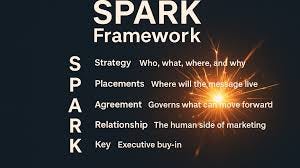
Professional content teams now use advanced prompting frameworks. One of the most effective is the S.P.A.R.K method. To get your next content to rank and avoid “AI Mush,” you can easily use the S.P.A.R.K. method:
- S (Specific): Define exactly what is needed (e.g., “A 2,000-word deep-dive guide”).
- P (Persona): Assign the AI a role (e.g., “Act as a Senior SEO Consultant with 15 years of experience”).
- A (Audience): Define who is reading (e.g., “Small business owners in the tech sector”).
- R (Restrictions): Set guardrails (e.g., “Avoid jargon,” “No bullet points in the intro,” “Use H2s for every new concept”).
- K (Knowledge): Provide the “Information Gain” data for the AI to use.
It is important to provide original information and data because much spam data is available on the search platform, which makes user concern with the original data. This is the most important part because it prevents generic “AI mush.” If all of this is implemented in today’s generation and put into the AI prompt, I don’t think any context can be missed. Before we go into AI, let’s understand semantic and Modular content in today’s marketing world.
6. What is Modular Content?
Modular Content is the most important structural change for 2026, which is an approach where content is built like Lego blocks, with specific small content, self-contained units that can be rearranged, reused, and uniquely surfaced by AI. Why it started:
Well, according to different sources, the traditional “monolithic” blog post (one long, unbroken essay) is difficult for AI to parse. When Google generates an AI Overview, it wants to “grab” the specific 50-word answer to the user’s question. Modular content was born from the need to make information “extraction-ready” for these AI systems. How it is written: Modular content is written in “chunks.” Each section (H2 or H3) must be able to stand alone as a complete answer.
- The Answer-First Rule: Every section should start with a direct, 40–60-word answer to the heading’s question before expanding into details.
- Semantic Tagging: Each “module” should be wrapped in clean HTML (like <article> or <section>) and backed by an FAQ and Article scheme, where you can tell the AI exactly what knowledge is inside that specific block.
Modular content is one of the biggest structural changes in modern SEO. Traditional blog posts were written like long essays. In 2026, content is built like Lego blocks. Each section is designed to work independently, where you can get the help of Google AI, Voice search, AI assistants, Featured snippets, and AI Overviews, where you can easily understand and extract answers more efficiently. So, why has modular content become important nowadays? Well, Google’s AI systems scan content differently today. Here are some examples of Modular Content
- Main Topic
- Content Marketing
- Content Modules
- SEO Basics
- Audience Research
- AI Writing Tools
- Email Marketing
- Analytics
- Conversion Copywriting
- Branding Strategy
Each module supports the main topic. Together, they build authority so it can get better for Semantic SEO and to provide accurate information to people who are looking forward to future development to the next generation and onwards. Google understands:
- topic relationships
- content hierarchy
- expertise depth
- Direct answers
- Structured information
- Clear sections
- Easily extractable insights
Therefore, having long unstructured content is harder for AI systems to process, which is why modular writing has become important for every writer to implement in their blogs and articles. Technical SEO and Performance in 2026
It is important to understand the usage of AI in the context of your content, whether you are using it for FAQ Schema or Product Schema. It should resonate with your website.
What is AI Mush?
AI mush is defined as the content that looks polished and well-written on the surface but actually has very little real value underneath. It often repeats the same common ideas, uses generic explanations, and fails to provide new insights, examples, or depth. While this type of content is easy to generate using AI tools. It is also easy for readers and search engines to ignore because it doesn’t mean to help the user or add anything unique to the topic.
7. What Is Semantic SEO?
In the past, SEO was mostly about repeating the same keyword again and again to rank our topic and website on the first page. For Example: “Best content marketing strategy” repeated 20 times on one page, which is why the method is outdated. Today in 2026, Google is much smarter and not only reads keywords, but it also understands the meaning, context, search intent, related topics easily found, user behavior, Entities (people, brands, concepts, tools), and develops relationships between topics for consumers.
This is a modern approach called Semantic SEO. In simple words, Semantic SEO is the process of creating content that fully explains a topic instead of focusing on one keyword repeatedly. Google now wants content that helps users understand a subject completely. So, if your article is about Content Marketing, Google expects related ideas naturally included, such as:
- SEO
- Audience targeting
- Branding
- Email marketing
- Analytics
- AI content tools
- Conversion strategy
- Social media
- Customer journey
Because all these concepts are connected to content marketing, while Google sees this as: “This page deeply understands the topic and all the questions and answers are found here, which is also called Topical Authority.
Importance of Semantic SEO in 2026
Here are some of the reasons why semantic SEO is important:
1. AI Search Understands Meaning
Search engines now use advanced AI models across different platforms. Even AI has introduced chatbots that help users find the right products and services needed from the user’s website to generate leads. However, Google understands synonyms, user intent, Topic relationships, and natural language. Where you no longer need exact-match keywords everywhere, but complete the topic that is found relevant to it and connect with user needs. This helps users to stay on the website for a longer time and find the answer of its need, and this can be implemented through having.
- “Content strategy.”
- “digital content planning.”
- “brand storytelling.”
2. Helps Rank for Multiple Keywords
One strong semantic article can rank for the main keyword, long-tail keywords, related searches, and help in providing question-based searches.s
3. Improves User Experience
Semantic content feels natural and useful for many readers, so that they can stay longer because they give you complete information, you can get your related answers that fit your needs, and can get a better understanding while Google measures this behavior.
Best Structure for Semantic SEO in 2026
It’s important to develop a strong Pillar Page + Topic Clusters that match and define the relevant topic. Pillar Page is a large guide about the main topic where every single topic is highly covered in one place, with one link. While Cluster Articles are small, detailed pages with limited information that you can get from
- SEO for Content Marketing
- Content Funnels
- AI Content Strategy
- Email Campaigns
- Analytics Tracking
All linked together. This is the strongest modern SEO model.
How To Apply the Semantic SEO Formula For 2026
Instead of adding one keyword repeated many times, you can use the main topic, add related entities, user intent, answer user questions, give supporting concepts, add internal linking, content depth, and Topic clusters, where you can see your article rank in 2026.
8. The Rise of Entity SEO
Entity SEO is the strategic shift from keyword-based optimization to establishing a brand as recognized as the word “entity,” making it unique and authentic from a concept that is written before. It focuses on topical authority, semantic relationships, and structured data, crucial for visibility in AI search, LLMs, and Google’s “reality engine” algorithms. Entity SEO became extremely powerful in 2026 when Google now connects information through entities rather than only keywords. Entities can also include:
- People
- Companies
- Brands
- Places
- Topics
- Products that create stronger topical relevance.
Video and Visual Search Are Growing Fast
Text content is still important, but visual search is rapidly increasing. Users now search through Voice, Images, AI assistants, Videos, and conversational search. Many platforms dominating attention include YouTube, TikTok, Instagram, LinkedIn, and AI-powered search engines, which are highly in demand. Today, content marketers must now create:
- Short-form videos
- Infographics
- Interactive content
- Podcasts
- Visual storytelling
Where the audience can easily implement the future has multi-format content.
Personal Branding Became Important
In 2026, people trust people more than brands, which is why personal branding has become a major career advantage. Today, writers, marketers, and strategists now build authority through LinkedIn content, Case studies, Thought leadership, Industry insights, and can share their personal experiences with the world. Businesses want professionals with visibility and credibility for better business opportunities.
What Is Coming Up In The Next 5 Years For Writers (2026–2031)?
The role of the writer is moving away from “drafting” toward “Strategy and Curation in the upcoming future trend. Here is what you can expect from the future trend:
- 2027–2028: The rise of Agentic SEO is expected, where writers manage AI agents that automatically update content based on real-time market changes.
- 2029–2031: “Search” will become truly multimodal when writers will need to be comfortable managing text, 3D assets for AR search, and voice-optimized snippets simultaneously. The role of writers is evolving rapidly.
What is Declining
- Keyword-focused writing
- Generic content
- Low-effort AI output
What is Growing
- Strategic thinking
- Authority building
- Content architecture
- AI collaboration
Emerging Trends
- AI-first search systems
- Increased zero-click results
- Higher emphasis on trust
- Structured knowledge content
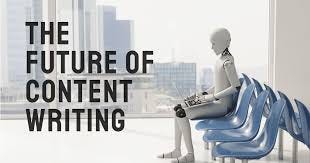
The Future of Digital Marketing Careers
Digital marketing is not dying, but it is evolving into more specialized roles where you can enhance your highest-demand in 2026, which include AI Content Strategist and SEO Strategist. So if you are an experts who understand:
- AI search
- Semantic SEO
- Technical SEO
- Search intent
- Entity optimization
While the Content Marketing Manager will handle various multi-platform content, defining audience growth, creating strong brand storytelling, and making the website a strong conversion funnel through their writing. Therefore, when it comes to Prompt Engineering, many specialists who train AI systems through advanced prompting. Writers will mainly focus on copywriting conversion in the future, where they will learn and implement:
- Sales psychology
- Landing pages
- Email funnels
- Customer behavior
However, Video Content Specialists will perform, and short-form video creators are in massive demand. Data-Driven Marketer will combine analytics with marketing strategy.
So, Why AI Will Not Fully Replace Professionals
AI is excellent for maximizing the speed of work; daily routine work will be managed by automation. Research assistance will be taken considered based on the given information produced by AI or the Google search engine. Therefore, businesses still need humans for:
- To prepare strategic decisions
- To have a creative direction
- Create a strong brand identity
- Emotional communication
- Customer trust
- Leadership
- Innovation
AI will still lack in defining the real-world experience, understanding human emotion, cultural nuance, difficult to give ethical judgment, and will always lack deep creativity, which is why professionals who survive are not the ones fighting AI. They are the ones learning how to use it intelligently.
What is Zero-Click Search: The New Challenge for Writers?
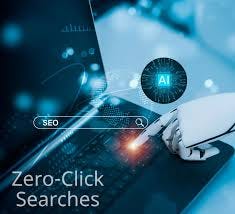
Zero-click search is a major shift in modern SEO where users get the answers they need directly on the search results page without clicking any website. This automatically reduces organic traffic for many sites but increases competition for visibility. As a result, the goal of SEO in 2026 is no longer just to get clicks, but it is also to be featured directly in search answers, snippets, and AI-generated summaries for user to find their answer through AI mode and get a relevant direct link to our website. For this, you will need to have a strong optimize for this, writers should focus on clear and structured content, provide quick and direct answers, use simple formatting for readability, and include unique insights or perspectives that make their content stand out from generic information.
How Search Engines Evaluate Content Today?
Modern search systems focus on quality signals rather than outdated tactics. Here are some of the major factors that a search engine looks for in content
1. Is your content Helpful for the audience? Does your content solve a real problem?
2. Is it different from what already exists, or has something new in the market been launched?
3. Does your content experience for the user create an impact on their real life? Does it show real understanding?
4. Is it easy to read and extract, and is it well-structured across the website? How long does the audience gain impact? Therefore, writers must align their content with these principles to succeed in today’s market competition.
Step-by-Step Roadmap for Writers
Here is a practical plan you can follow:
- Try to understand the main user intent in what services or products they are looking for in today’s market competition.
- Focus on the major problems that common users find and try to fill that gap with your experience and expertise, not using keywords.
- Choose a Niche and go deeper instead of broad, and see what you can find and what changes you can make for the future.
- You can build a strong authority where you can create consistent, high-quality content.
- You can also use Modular Structure and break your content into clear sections. Make sure you add Value in your content that includes insights, examples, and data.
- Use AI Smartly and combine AI efficiency with human creativity in your content.
- Don’t focus on AI plagiarism checkers that Google doesn’t believe in, such as ZeroGpt, duplicate check, small seotools, and originality, because these tools are here to create confusion for many writers. Google has its own system that can easily detect the content based on authentic and useful for the audience.
- Make your content authentic for users to find value in it. Develop a strong optimization for AI extraction. Make content clear and structured, and develop trust.
Final Thought
The future of SEO and content writing in 2026 is no longer about tricking search engines with keywords but rather about understanding people, problems, and meaning. Search has evolved into an intelligent system that rewards clarity, depth, and usefulness rather than repetition or surface-level writing.
Writers who succeed in this new era are not those who produce more content, but those who produce better-structured, insight-driven, and experience-backed content. Create concepts like Semantic SEO, modular content, AI search, and zero-click results, all of which point in the same direction. So, your Content must be designed for both humans and AI systems, with clear answers, strong structure, and real value. AI is not replacing writers; it is changing how they work to save other people’s time and create strategies to compete against market competition. The major role of the writer is shifting from simply “writing articles” to designing information, guiding AI tools, and building authority through strategy, originality, and trust.
In simple terms, the future belongs to creators who can combine human creativity with AI efficiency while focusing on one core principle. So, creating content that genuinely helps the reader think, decide, and act with confidence. Stay here for more updates!
Comments